Character Reference Development
Building structured visual anchors for costume, silhouette, expressions, poses, and signature details.
AI VIDEO WORKFLOW STUDY · CHARACTER CONSISTENCY · GENERATIVE FILMMAKING
Deadpan Superhero Comedy · AI Character-Driven Video Production
An original deadpan superhero comedy teaser developed as a practical study in AI character development, cinematic video generation, continuity, editing, and sound design.
Watch the Film TeaserProject classification: Original Project. Commercial proof: Capability Proof.
Generating individual AI shots is relatively easy. Building a short film where the characters, costumes, relationships, tone, and story remain recognizable from shot to shot is much harder. The production was designed around that continuity problem.
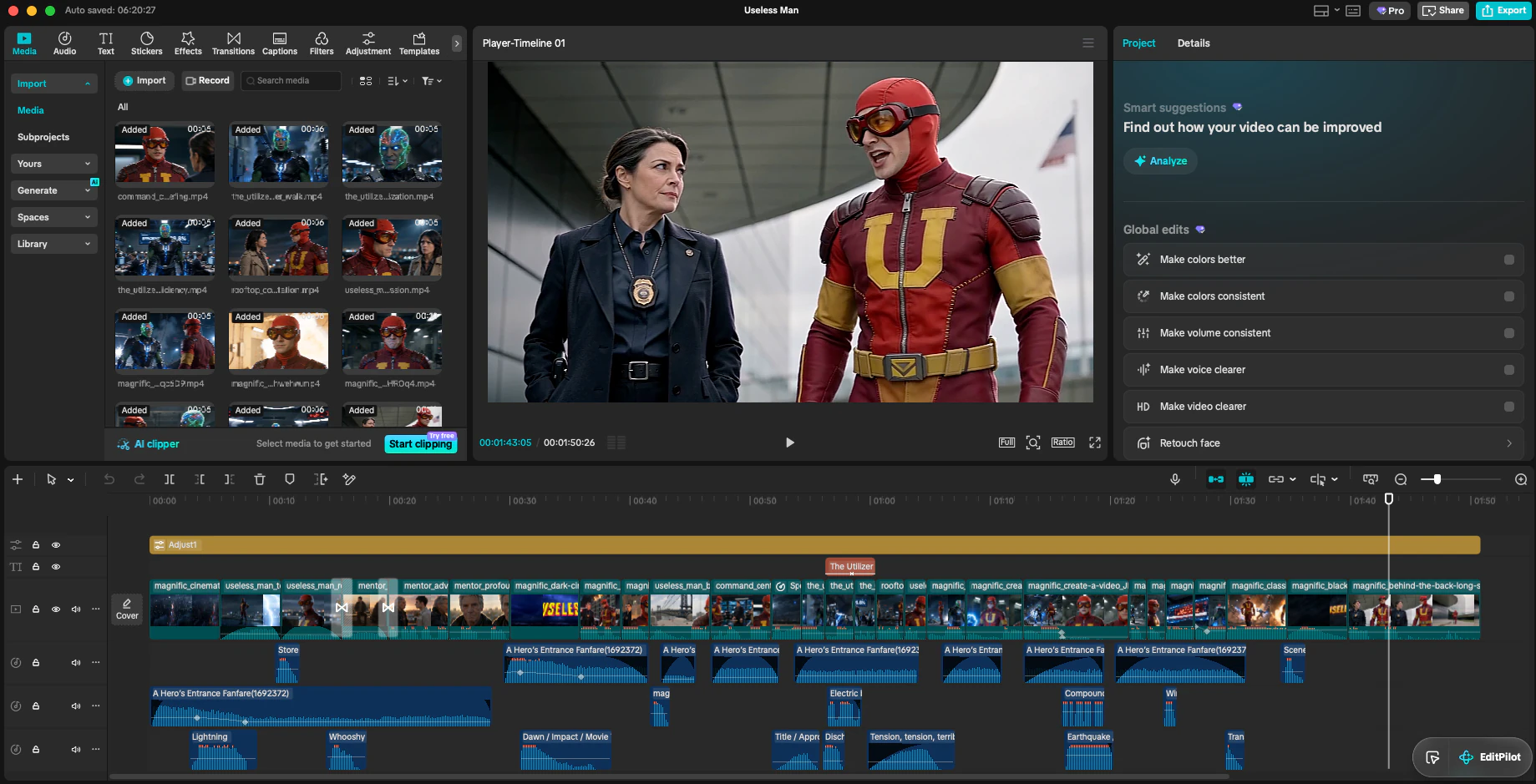
The workflow moves from structured character references into generated scenes, then into a fully edited teaser inside CapCut.
Before generating the film, I built structured character references covering silhouette, wardrobe, color, facial direction, poses, expressions, and signature details. These sheets gave the generation process a more stable visual target and helped reduce character drift across scenes.
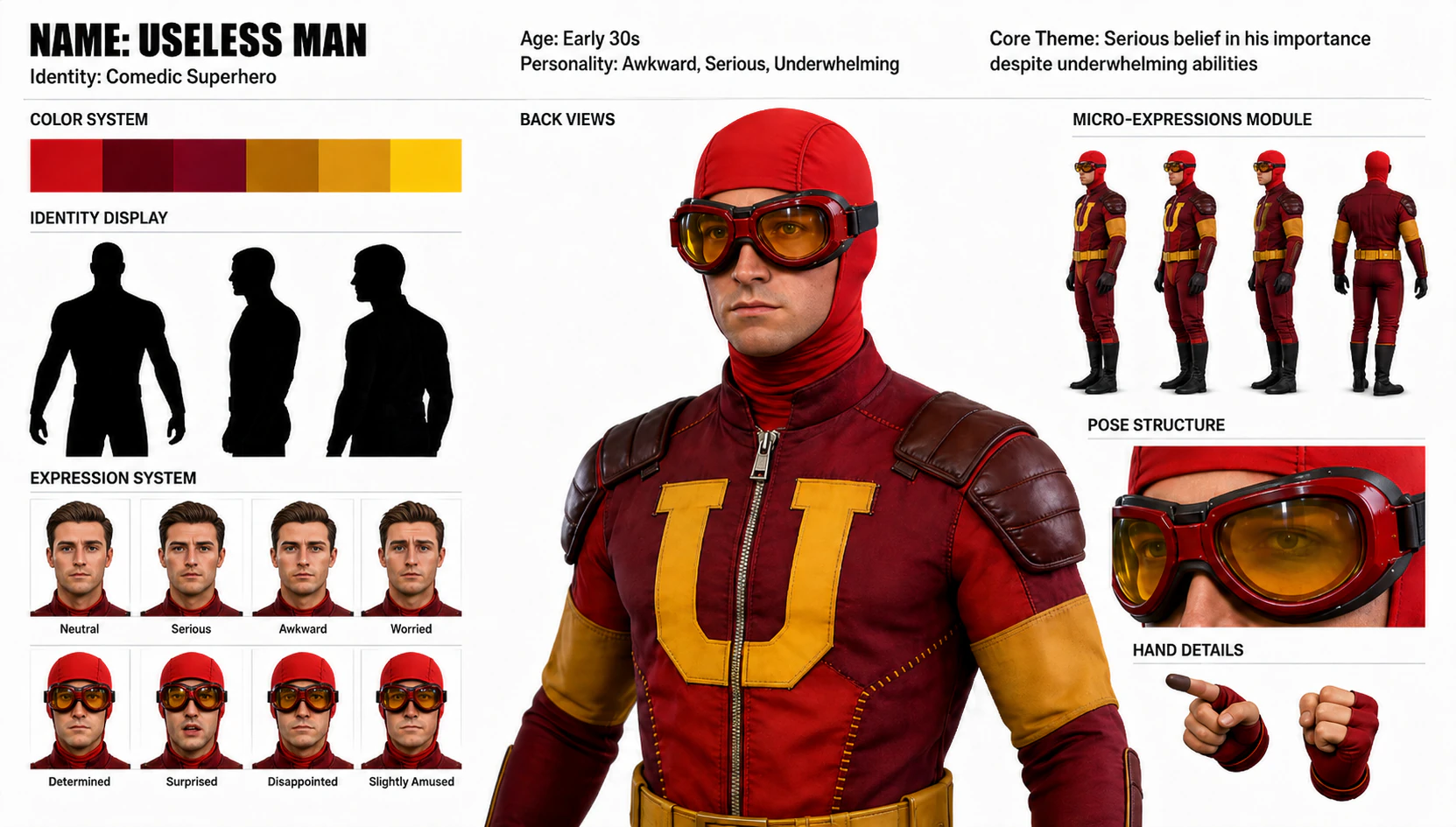
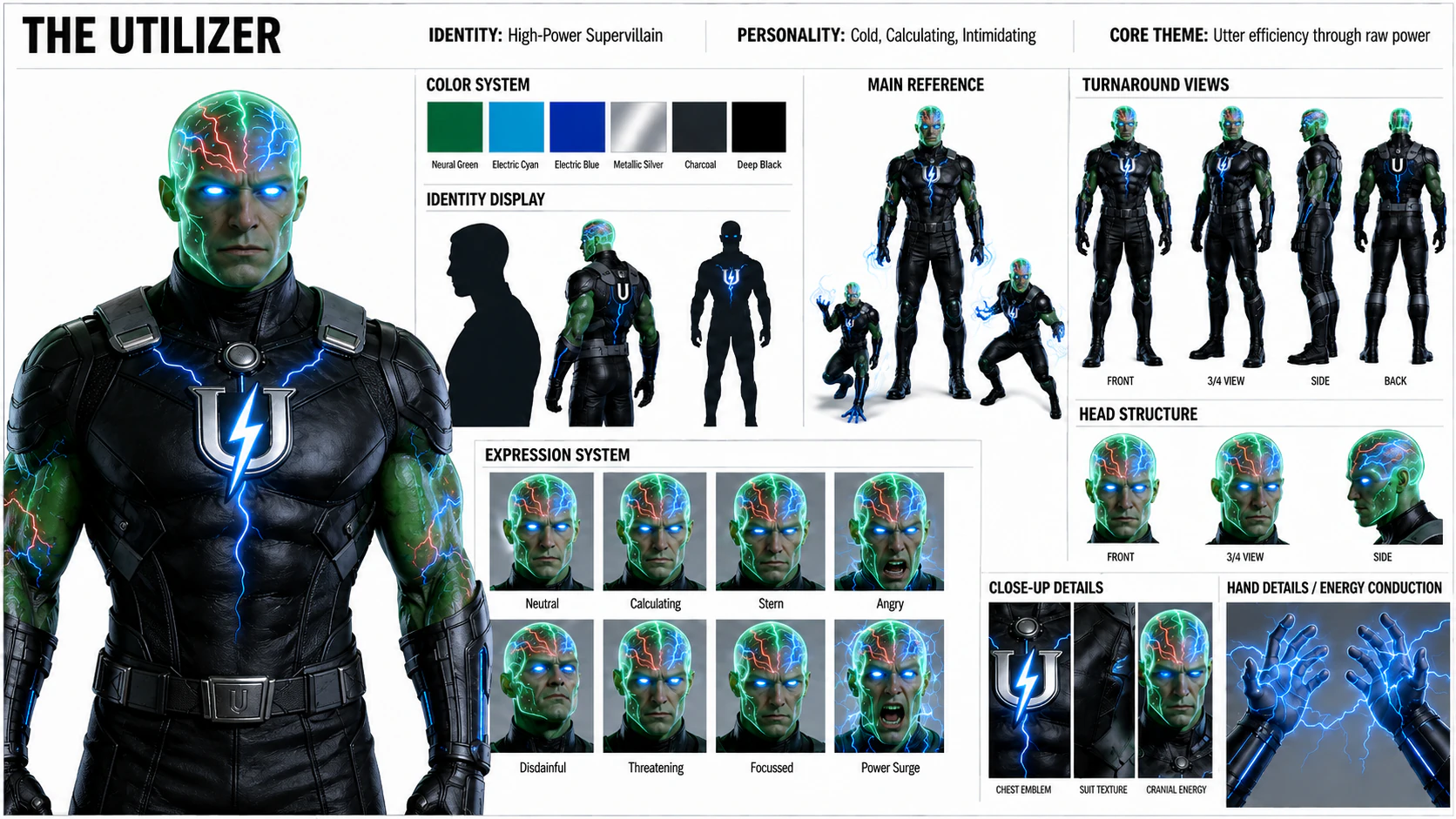
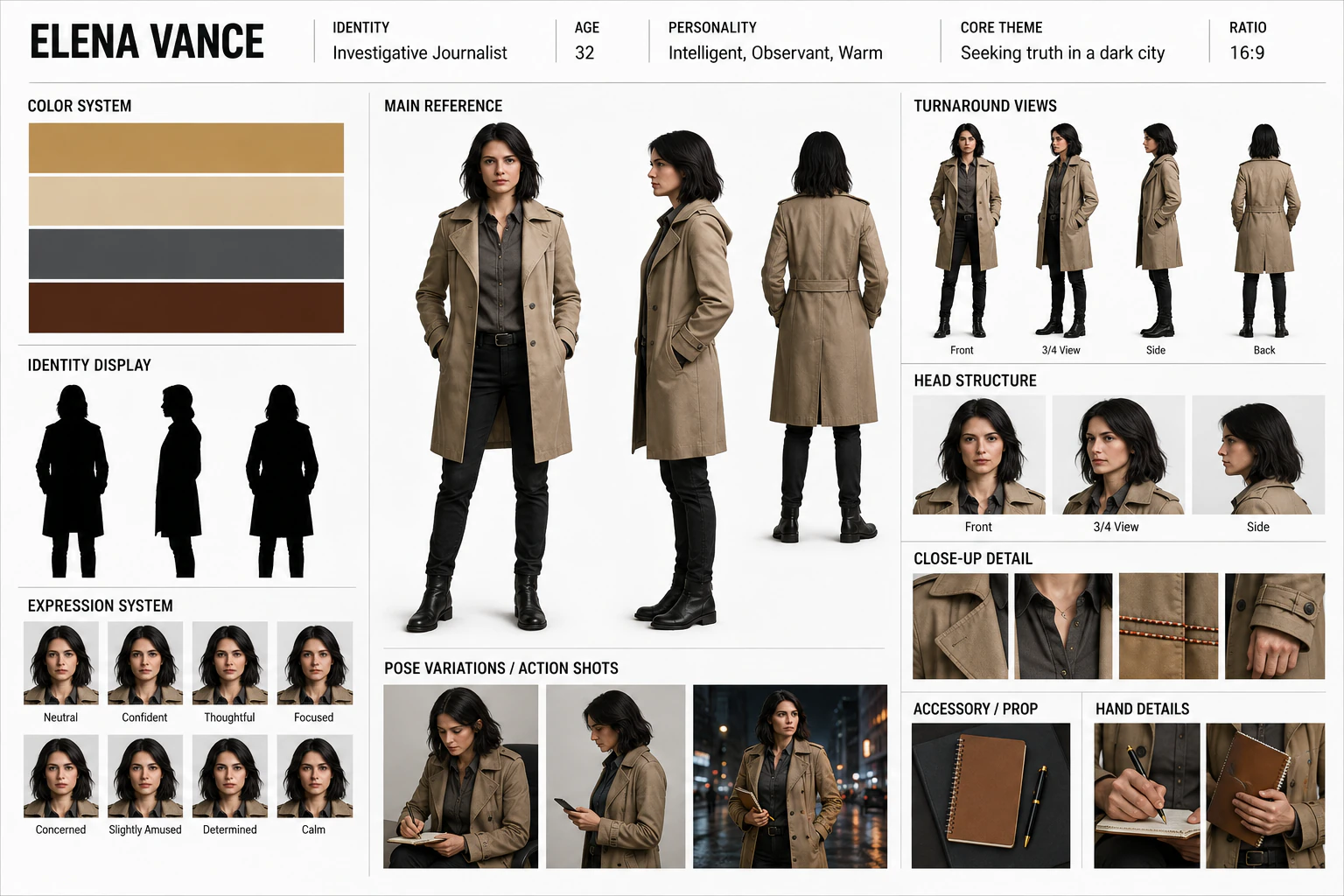
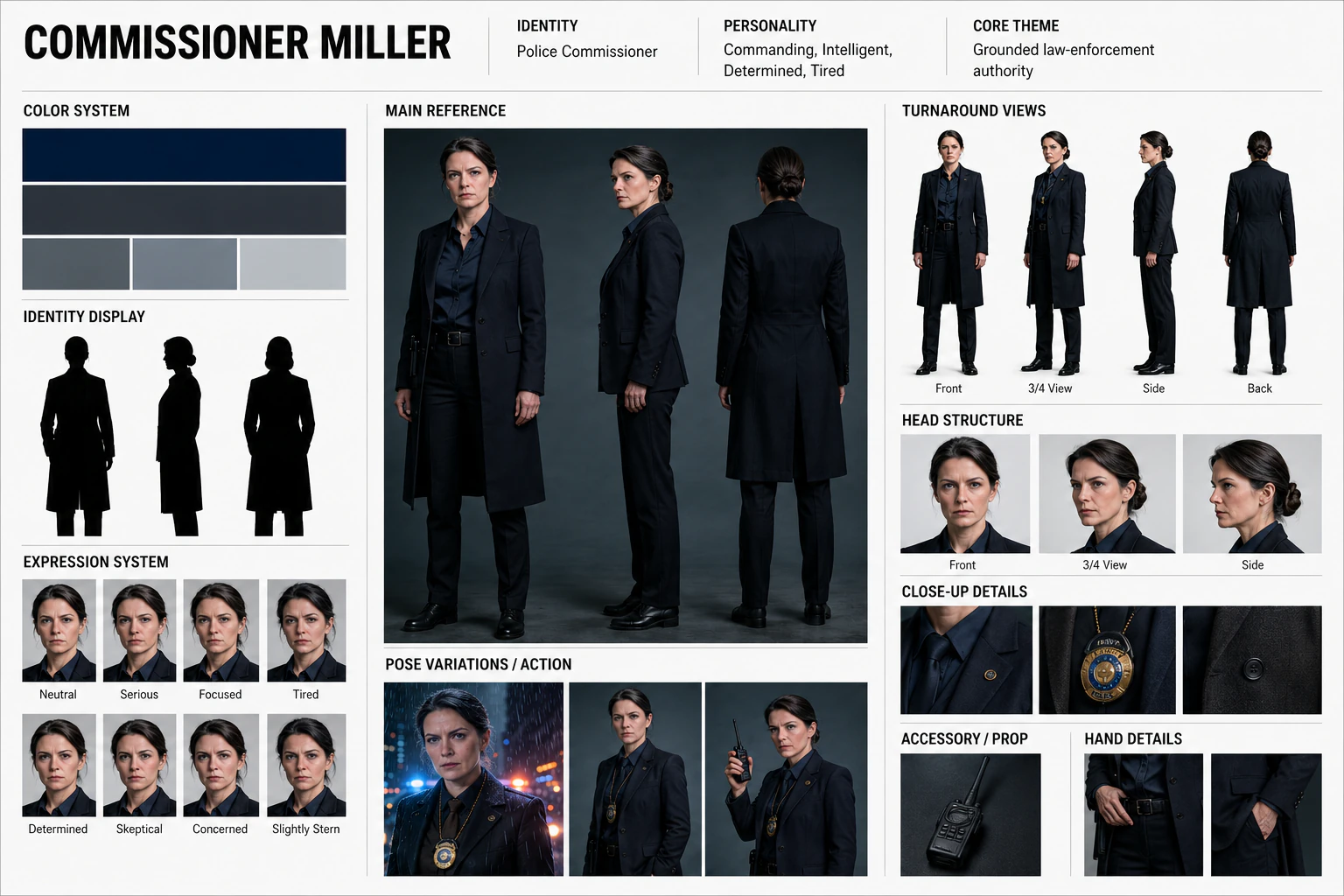
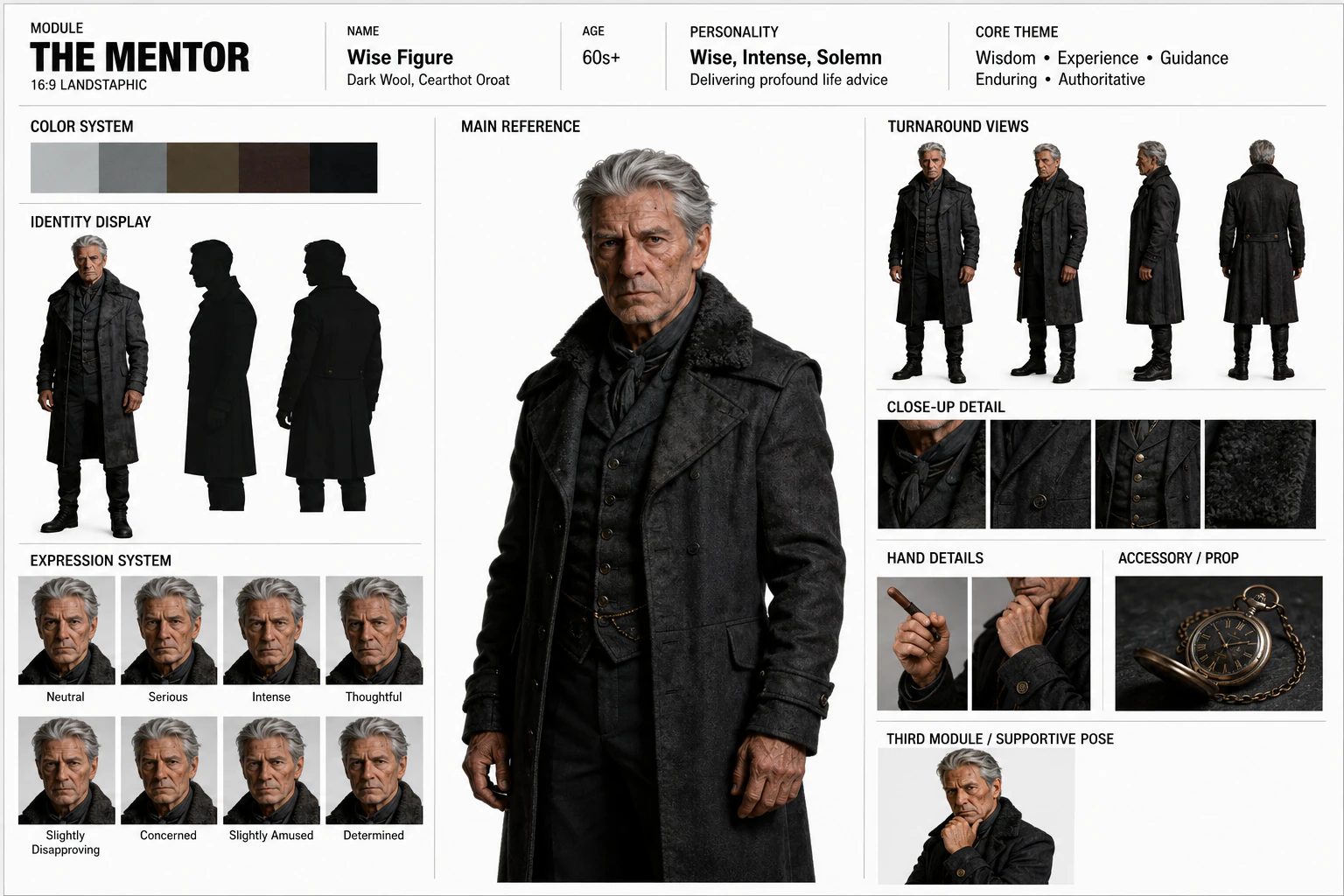
Character references were used as anchors for recurring roles. Prompts were built around those characters, continuity was checked against the reference sheets, and scenes were treated as connected sequences rather than isolated outputs.
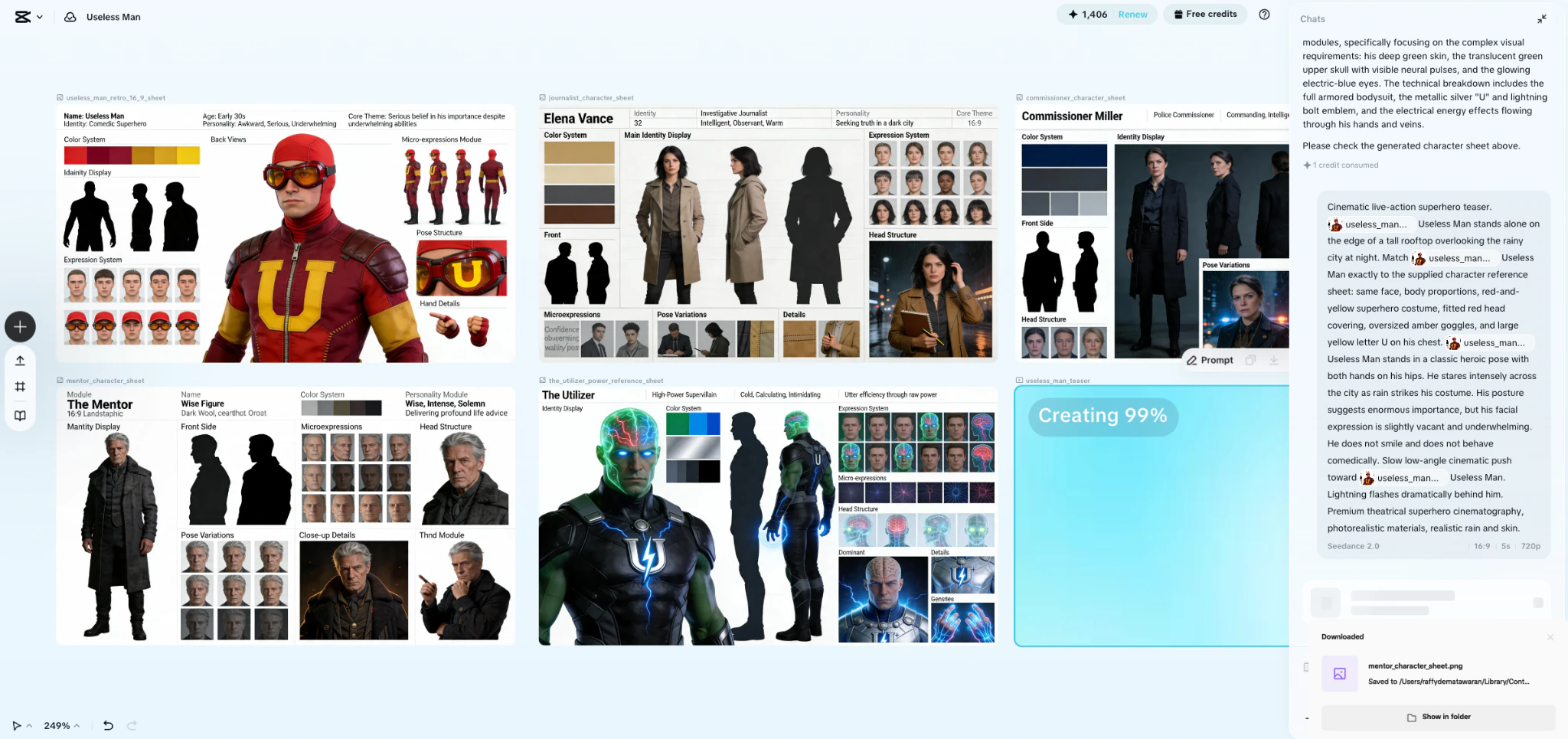
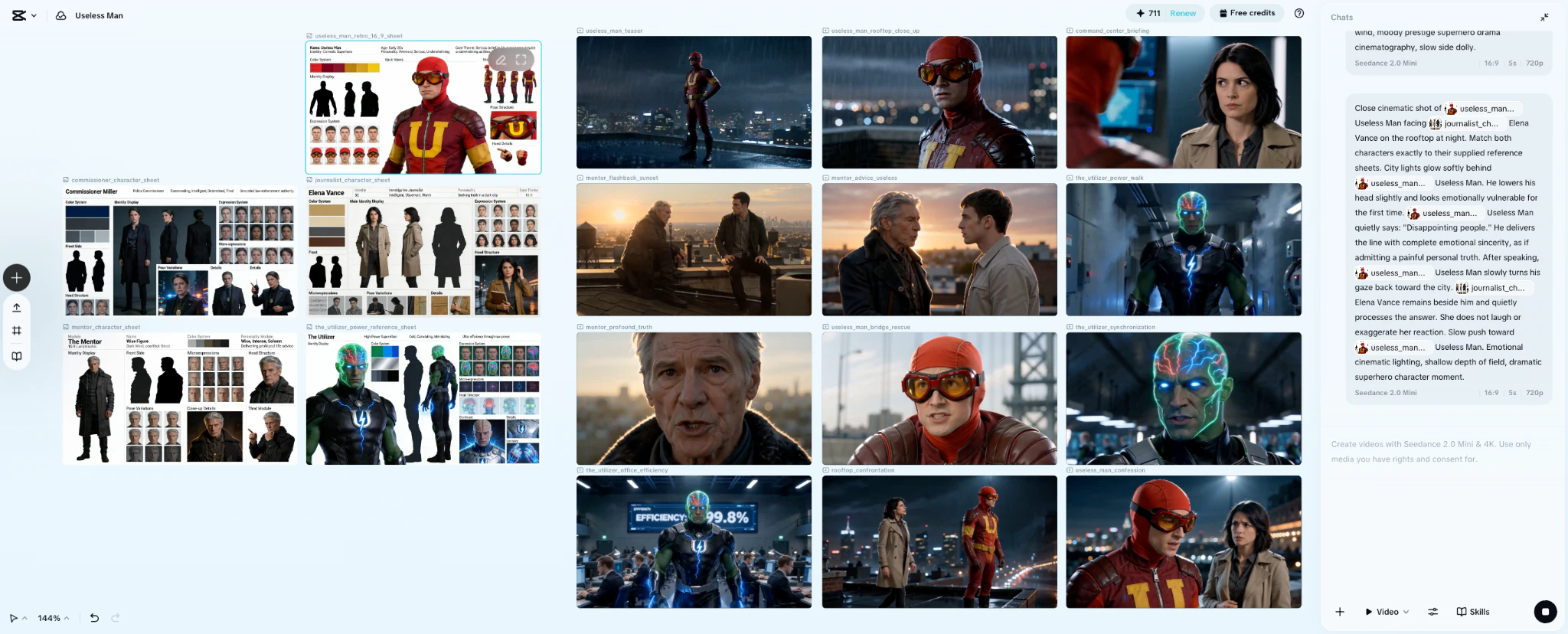
The generation stage was organized around scene intent, character registration, performance, framing, and continuity. Generated shots were evaluated against the character system and against the surrounding sequence rather than treated as finished outputs by default.
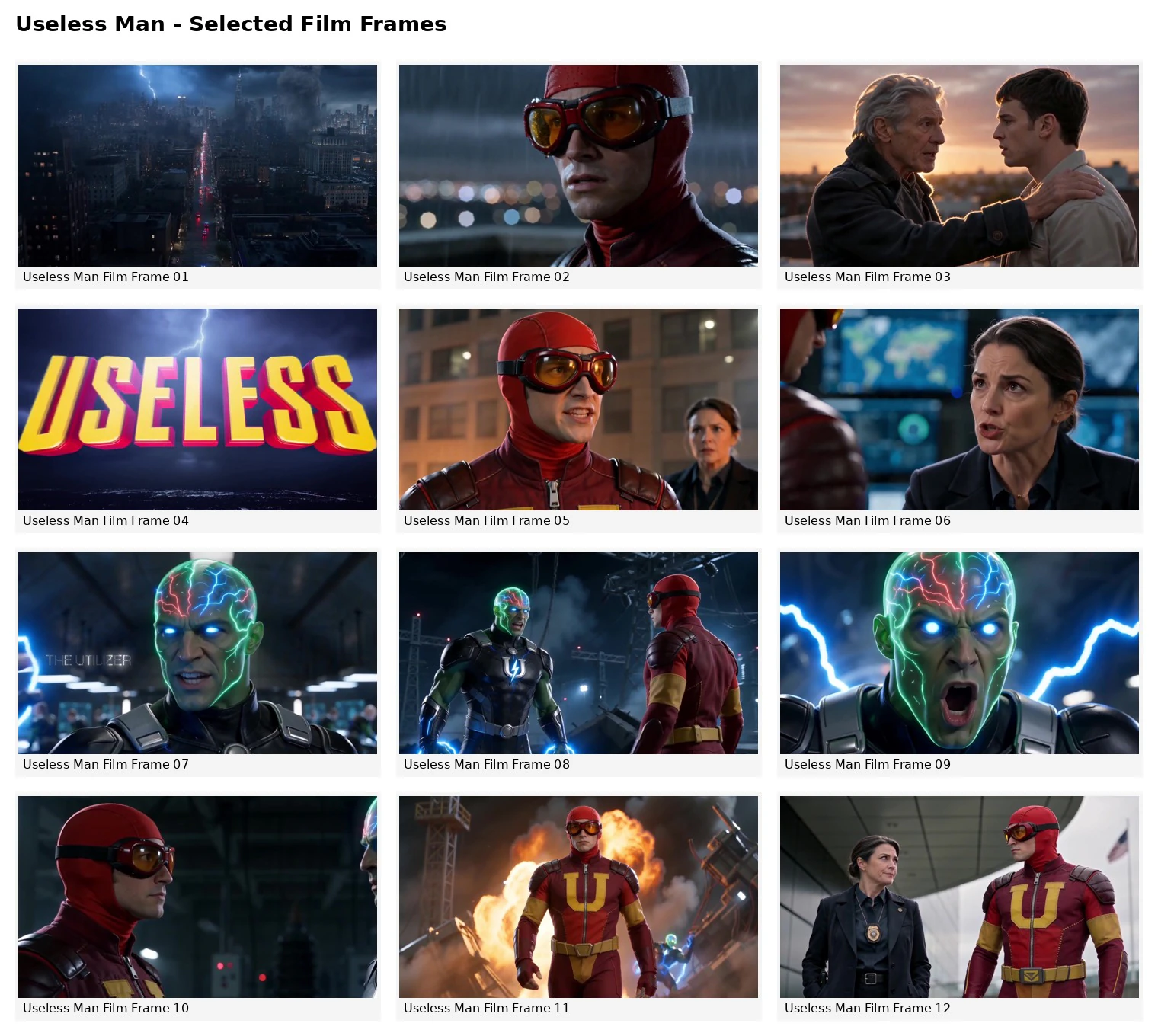
The contact sheet maps the teaser's visual progression. Four larger frames show the range from atmosphere and character relationships to confrontation and final action.
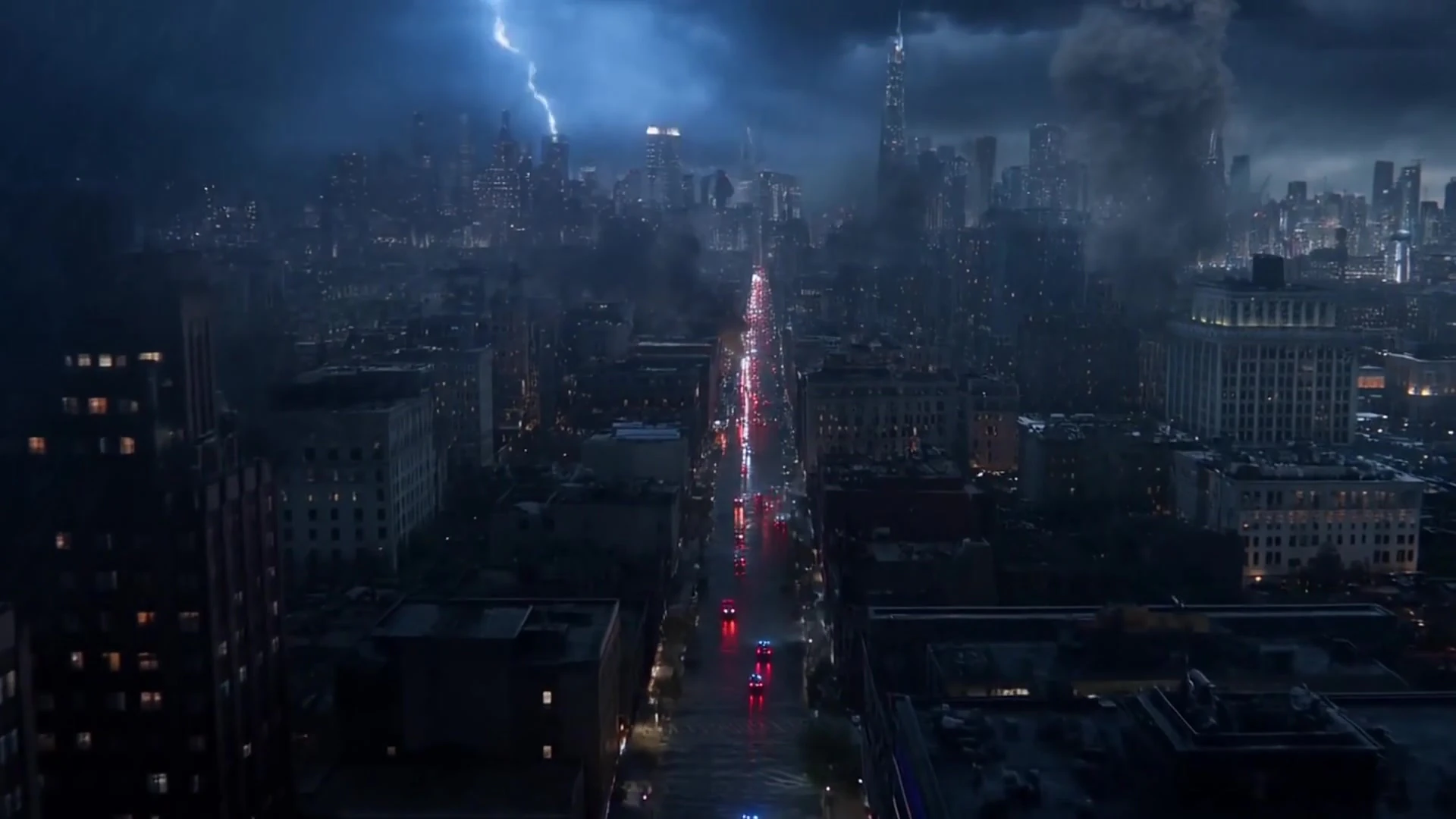
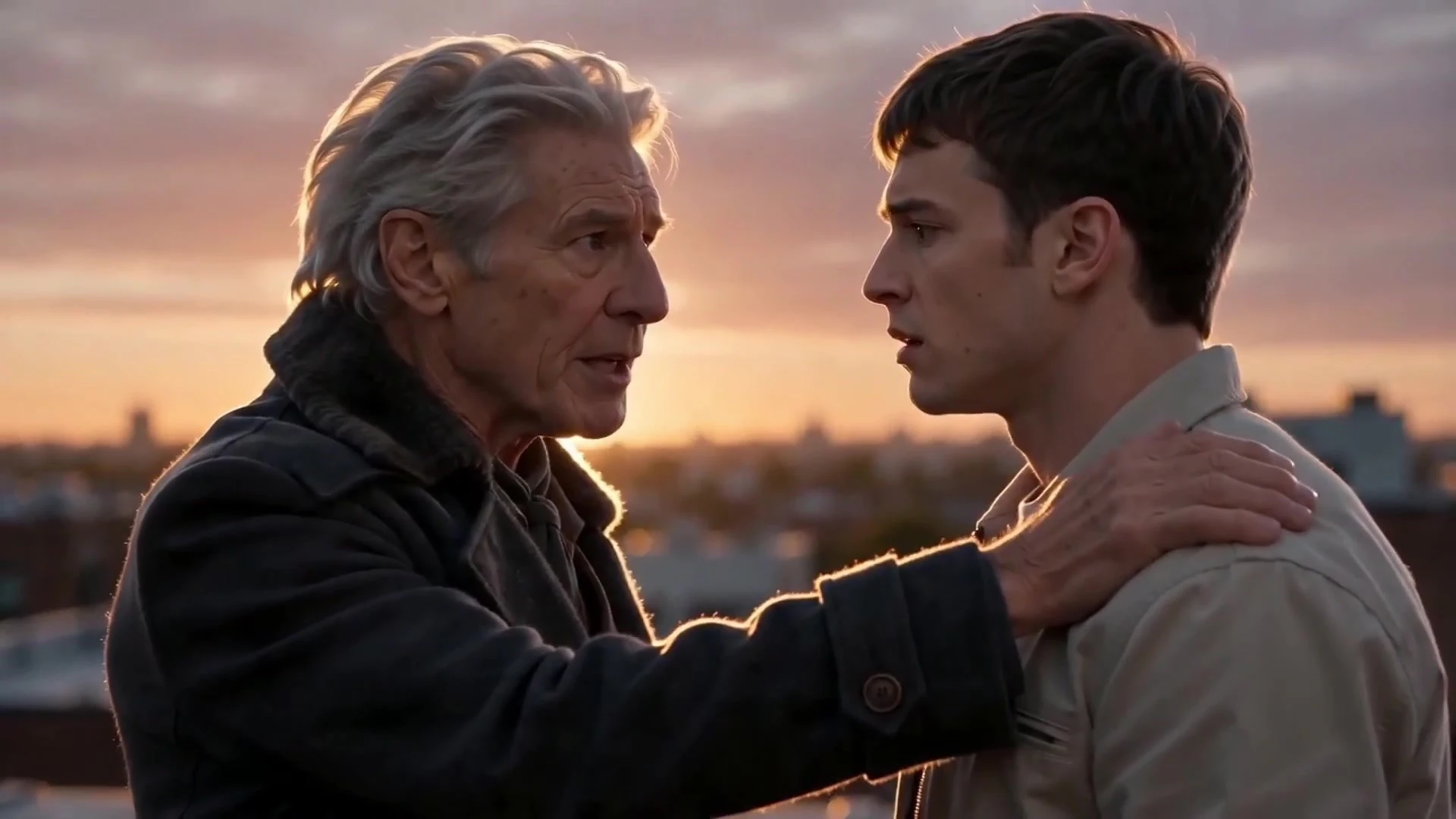
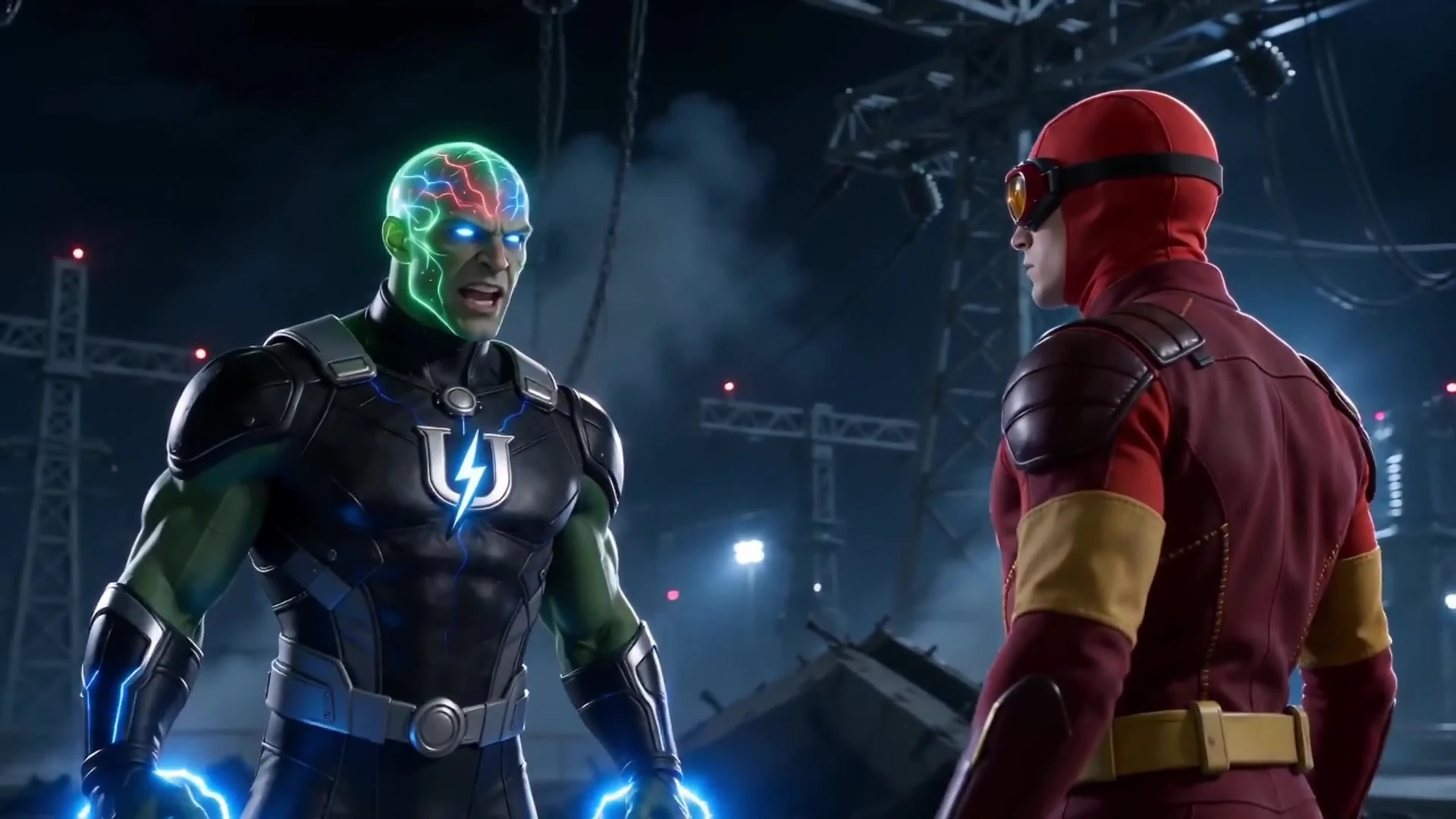
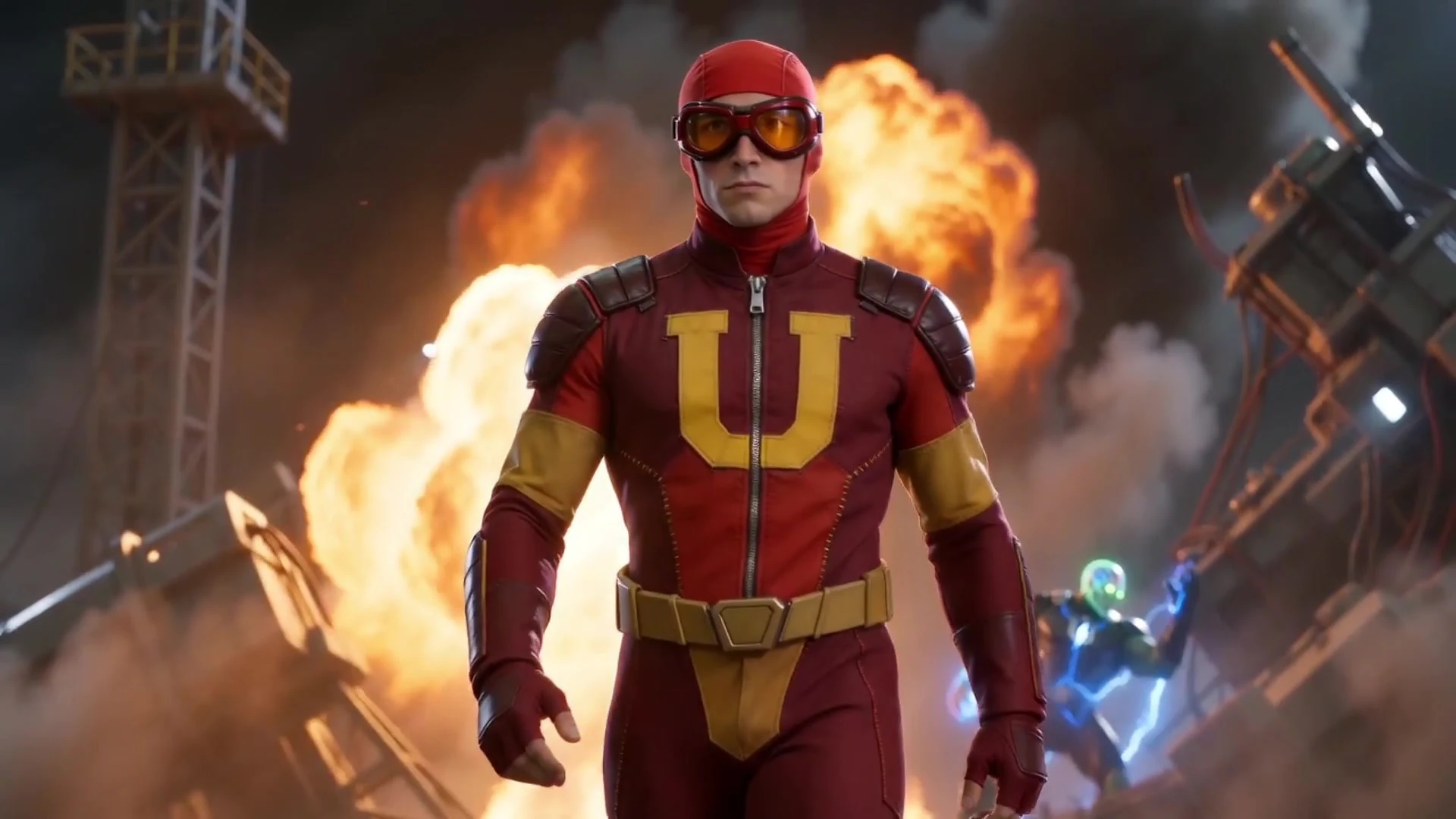
The film teaser was assembled in CapCut from multiple generated video clips, with timing, transitions, music, sound effects, pacing, and finishing handled as part of the edit. The timeline shows the project as an actual post-production sequence rather than a collection of disconnected AI outputs.
Building structured visual anchors for costume, silhouette, expressions, poses, and signature details.
Directing scene intent, framing, character performance, and shot purpose before generation.
Reviewing recurring characters and story beats across connected scenes rather than isolated clips.
Balancing establishing shots, character moments, confrontations, and action escalation.
Iterating on generated performances for character readability, emotion, and narrative function.
Shaping selected clips into a paced sequence with purposeful transitions and story progression.
Using music and effects to reinforce timing, atmosphere, impact, and continuity.
Bringing direction, generated scenes, editing, sound, and finishing into one completed teaser.
Useless Man shows how I approach AI video as a production system rather than a single-generation task. Character design, references, scene direction, iteration, editing, and sound all work together to make the teaser feel directed rather than simply generated.
I can help shape the character system, direct the scenes, control continuity, and finish the edit and sound as one coherent production.